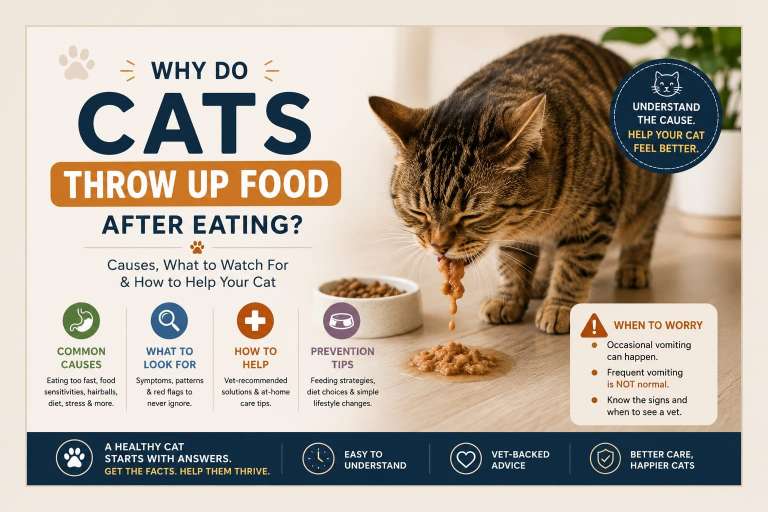
Does your cat gobble up their food and then throw it all back up a few minutes later? You’re not alone. Cat vomiting after eating is one of the most common complaints pet owners bring up at the vet. It’s messy, it’s worrying, and it can feel like it happens way too often.
The good news? A lot of the time, there’s a simple reason and a simple fix. But sometimes, frequent vomiting is your cat’s way of telling you something is really wrong.
In this guide, we’ll walk you through 10 common causes of cat vomiting after eating, explain the difference between vomiting and regurgitation, show you a simple cat vomit color chart, share some home remedies for cat vomiting, and tell you exactly when it’s time to call the vet.
Vomiting vs. Regurgitation in Cats: What’s the Difference?
Before we dive into causes, it helps to understand what’s actually happening.
Vomiting is an active process. Your cat’s stomach muscles contract, they might crouch down, heave a few times, and bring up partially digested food or liquid. This means the food made it past the stomach before coming back up.
Cat regurgitation is more passive. The food comes back up almost immediately after eating, sometimes within seconds, and it usually looks like whole, undigested kibble or food in a tube shape. There’s no heaving or warning. It just happens.
Why does this matter? Because cat regurgitation often has different causes than true vomiting. Regurgitation usually points to eating too fast or a problem with the esophagus. Vomiting is more likely to involve the stomach or intestines.
If you’re wondering “why does my cat throw up undigested food after eating,” you’re probably dealing with regurgitation and the fixes are usually pretty simple.
Cat Vomit Color Chart: What Does the Color Mean?
The color and texture of your cat’s vomit can give you important clues:
10 Common Reasons Your Cat Throws Up After Eating
1. Eating Too Fast
This is probably the most common reason cats vomit or regurgitate after meals. When a cat eats too quickly, they swallow a lot of air along with their food. That air and barely-chewed food gets pushed right back up because the stomach can’t handle it all at once.
You’ll usually notice this as cat regurgitation the food comes back up almost immediately and looks just like it did going in.
Why do cats eat so fast? Competition with other cats in the house, anxiety or stress around meal time, instinct from their wild ancestors (eat fast or lose your meal), or simply really loving their food.
Interestingly, stress-related behaviors like excessive meowing at feeding time can also be a sign your cat feels anxious around food. If you’ve noticed your cat being more vocal lately, it’s worth reading about why cats meow so much it could be connected to their mealtime anxiety.
What to do: Use a slow feeder bowl, spread kibble on a flat surface like a cookie sheet, or use a puzzle feeder. You can also try giving smaller meals more often throughout the day instead of one or two big ones.
2. Sudden Diet Change
Cats have sensitive digestive systems. If you switch their food too quickly even to a better, healthier brand their stomach can rebel. This shows up as vomiting or loose stool shortly after eating.
This is a very common reason for cat vomiting after eating that owners often overlook. They assume the new food is bad, but often it’s just the speed of the switch.
What to do: Always transition over 7 to 10 days. Start with 75% old food and 25% new food. Slowly shift the ratio each day until they’re fully on the new food. If vomiting starts, slow the transition down even more.
3. Hairballs
Cats groom themselves constantly. In the process, they swallow a lot of loose fur. Most of it passes through the digestive system just fine, but sometimes it clumps together in the stomach into a hairball.
When the stomach can’t push the hairball through, your cat vomits it up. This often happens after eating because the stomach activity triggers the expulsion. Hairballs in cats usually look like a long, sausage-shaped clump of matted fur, not a ball, despite the name.
Long-haired cats like Persians and Maine Coons are more prone to hairballs, but any cat can get them.
What to do: Brush your cat regularly to reduce the amount of fur they swallow. You can also try hairball-control cat foods or hairball lubricant treats. Adding a little fish oil to their food can improve coat health and reduce shedding.
4. Food Allergies or Intolerances
Food allergies in cats are more common than most people realize. Your cat’s immune system can react badly to certain proteins (like chicken, beef, or fish) or other ingredients in their food. This can cause vomiting, diarrhea, itchy skin, or bald patches.
The tricky part is that food intolerance (a digestive issue, not an immune reaction) looks very similar. Either way, your cat’s gut doesn’t agree with something in their diet.
Unlike regurgitation, vomit from food allergies or intolerances usually looks partially digested, not whole food.
What to do: Talk to your vet. They may recommend an elimination diet or a hypoallergenic food trial. Keep a food diary to track patterns. Don’t just switch foods randomly work with your vet to narrow down the culprit ingredient.
5. Eating Grass or Non-Food Items
You’ve probably seen your cat chewing on grass or houseplants. Cats sometimes do this intentionally to soothe an upset stomach or help move a hairball along. Grass causes them to vomit, which clears out whatever was bothering them.
While occasional grass-eating isn’t a concern, frequent vomiting of plant material can be a sign of an underlying stomach problem.
More concerning: Some cats eat non-food items like string, hair ties, rubber bands, or plastic, and this can cause a dangerous blockage. If your cat keeps throwing up but seems fine at first, a hidden foreign object could be the culprit.
What to do: Keep harmful items out of reach. If you suspect your cat swallowed something, go to the vet right away. Don’t wait.
6. Overeating
Some cats, especially free-fed cats with unlimited access to food, simply eat more than their stomach can hold. The stomach gets too full, and the excess food comes back up.
This is different from eating too fast. A cat can eat at a normal pace but still overeat if there’s always food available.
What to do: Switch from free-feeding to scheduled meal times. Measure out the right portion size for your cat’s weight and age based on your vet’s guidance.
7. Gastrointestinal Disorders
When home causes have been ruled out and your cat keeps throwing up, it may be time to consider cat gastrointestinal problems like gastritis (inflammation of the stomach lining), Inflammatory Bowel Disease or IBD (chronic inflammation of the GI tract), or pancreatitis (inflammation of the pancreas, which disrupts digestion).
These conditions cause frequent vomiting, often alongside other symptoms like weight loss, diarrhea, and changes in appetite. They require a vet diagnosis and ongoing treatment.
What to look for: Vomiting that doesn’t improve with simple changes, plus weight loss, lethargy, or loose stools.
8. Kidney or Liver Disease
Older cat throwing up undigested food or vomiting frequently? Kidney and liver disease become more common as cats age, and vomiting is often one of the first visible signs.
The kidneys filter toxins from the blood. When they start to fail, those toxins build up and cause nausea and vomiting. Liver disease works similarly the liver stops clearing waste properly, which upsets the stomach.
Other signs include increased thirst, weight loss, bad breath, and lethargy.
What to do: If your senior cat is throwing up regularly, get bloodwork done at the vet. Kidney and liver disease are manageable if caught early.
9. Hyperthyroidism
This is one of the most common conditions in older cats. The thyroid gland produces too much hormone, which speeds up the body’s metabolism. This can cause vomiting after eating, increased appetite while still losing weight, hyperactivity or restlessness, and diarrhea.
Many owners notice their cat seems to be eating more than ever but getting thinner. If your cat has these symptoms along with frequent vomiting, hyperthyroidism is worth checking for.
What to do: A simple blood test at the vet can confirm hyperthyroidism. It’s very treatable with medication, a special diet, or other options your vet will discuss.
10. Intestinal Blockage (Serious Emergency)
This is the most serious cause on this list. If your cat swallowed a foreign object like a piece of string, a hair tie, or part of a toy, it can get stuck in the intestines and cause a blockage.
Signs of a blockage include repeated vomiting after every meal, refusing to eat, a belly that looks swollen or feels hard, lethargy and weakness, and no bowel movements.
A blockage is life-threatening and requires emergency vet care. Don’t try home remedies if you suspect this.
Cat Throwing Up Undigested Food But Acting Normal?
This is one of the most common questions pet owners search for “my cat keeps throwing up but seems fine.”
If your cat throws up food but is otherwise playful, eating well, drinking water, and using the litter box normally, the cause is usually one of the benign ones: eating too fast, hairballs, or minor food sensitivity.
However, “acting normal” doesn’t always mean everything is fine. Cats are very good at hiding discomfort. If the vomiting is happening more than once or twice a week, get your vet involved even if your cat seems okay.
Why Do Cats Throw Up After They Eat Water?
If your cat drinks water and immediately throws it up, this is usually one of three things:
- Drinking too fast same as eating too fast, they gulp air and water comes back up
- An empty, irritated stomach water hitting an empty stomach can trigger vomiting
- Nausea if your cat feels nauseous, even water won’t stay down
Try moving their water bowl away from their food bowl. Some cats prefer running water, so a pet fountain may help. If it keeps happening, check with your vet.
Home Remedies for Cat Vomiting
Before trying any home remedy, make sure your cat isn’t showing any red flag symptoms (blood in vomit, extreme lethargy, belly pain, not eating for 24 hours or more). If they are, skip home remedies and call the vet.
For mild, occasional vomiting, here are some safe home remedies for cat vomiting:
- Slow Down Eating Use a slow feeder bowl, puzzle feeder, or spread kibble on a flat surface. This is free and often solves the problem overnight.
- Smaller, More Frequent Meals Instead of one or two large meals, feed three to four small ones. This reduces the amount in the stomach at one time.
- Gradual Food Transitions Always change food slowly over 7 to 10 days. Mix old and new food, adjusting the ratio gradually.
- Brush Your Cat Regularly Reduces the fur they swallow and prevents hairballs. Especially important for long-haired cats.
- Hairball Treats or Gel Available at pet stores, these help hair pass through the digestive system instead of coming back up.
- Temporarily Feed a Bland Diet After an episode of vomiting, some vets recommend offering plain boiled chicken (no seasoning) or a vet-recommended sensitive stomach formula for a day or two to let the gut rest.
- Fresh Water and Hydration Make sure your cat always has clean, fresh water. A pet fountain can encourage drinking and prevent gulping.
Signs You Need to Call the Vet
Occasional vomiting (once or twice a month) is generally not a cause for alarm. But here’s when you should call your vet: vomiting more than once a week consistently, blood in the vomit (red, pink, dark brown, or black), an older cat throwing up regularly, vomiting along with lethargy, diarrhea, or not eating, significant weight loss, a belly that looks swollen or causes your cat pain when touched, suspicion that your cat swallowed something, vomiting every single meal, or your cat stopping drinking water.
At the vet, they may run blood tests, take X-rays, or do an ultrasound to figure out what’s going on. The sooner you catch a serious problem, the better the outcome.
Final Thoughts
Cat vomiting after eating is common, but that doesn’t mean you should always ignore it. Understanding the difference between a cat that ate too fast and a cat with a serious underlying condition can make a real difference in their health.
As a caring cat owner, it’s also good to stay informed about other aspects of your cat’s health and wellbeing. For example, if you’re ever thinking about long-term planning for your pet, you might want to look into cat taxidermy costs as one way some owners choose to memorialize a beloved companion. And if you’ve ever wondered about common vet procedures like declawing and whether they’re the right choice, this guide on how much it costs to declaw a cat covers everything you need to know before making that decision.