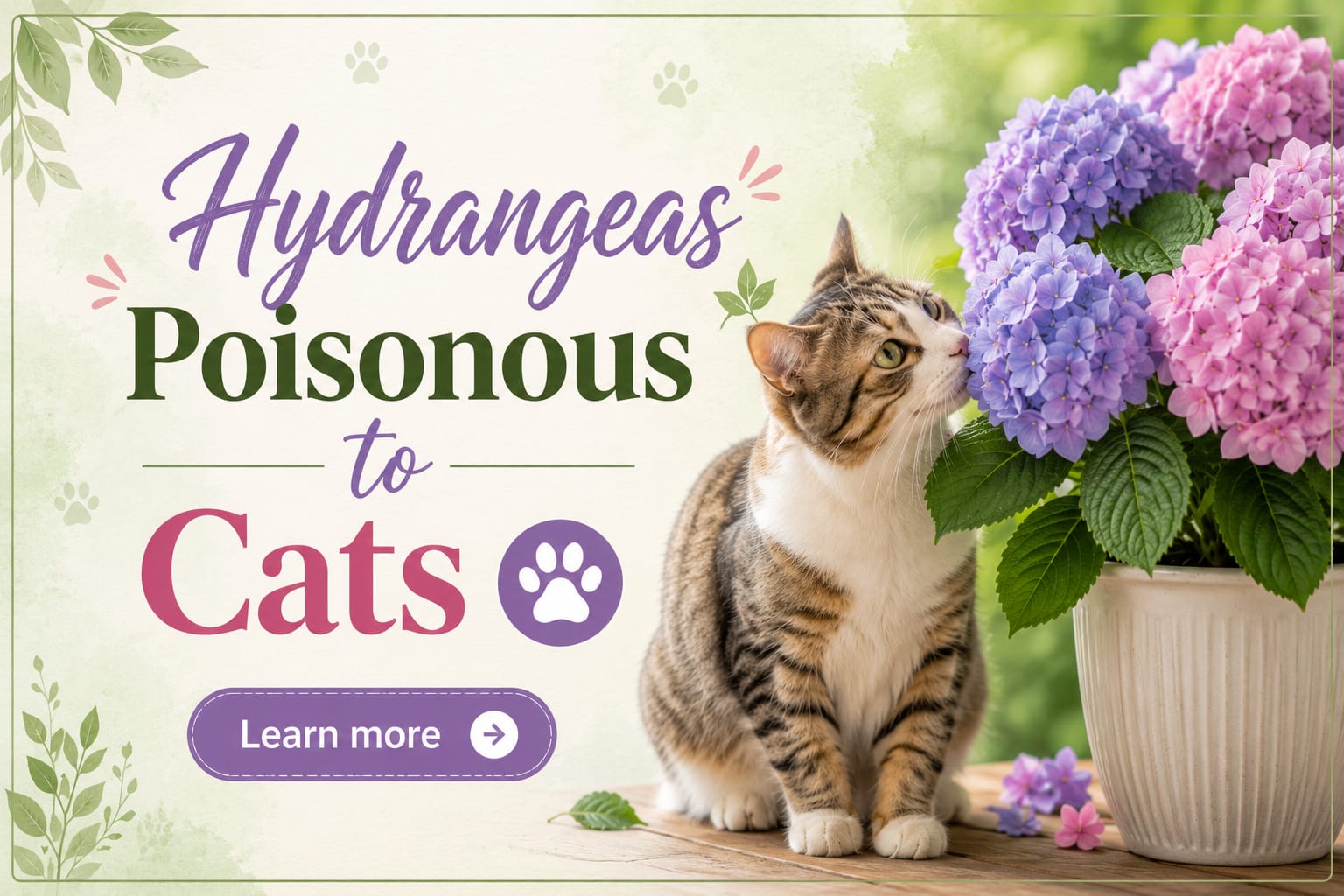
Hydrangeas are beautiful flowers that brighten up many gardens and homes with their stunning blooms. However, if you’re a cat owner, you might be wondering: are hydrangeas poisonous to cats? The answer is yes, and it’s important to understand the risks to keep your feline friend safe.
Are Hydrangeas Poisonous to Cats?
Yes, hydrangeas are poisonous to cats. Both the leaves and flowers contain toxic compounds that can harm your pet if ingested. Even though hydrangeas are not considered severely toxic, they can still cause uncomfortable gastrointestinal problems in cats. If you have these plants in your home or garden, it’s crucial to take precautions to keep your curious cats away from them.
Understanding Hydrangea Toxicity in Cats
The main toxic components in hydrangeas are cyanogenic glycosides, which are compounds that can release cyanide when broken down in the digestive system. This might sound alarming, but the amount your cat would need to eat to cause serious harm is quite large. However, even small amounts can cause mild to moderate symptoms that make your cat uncomfortable.
Since there are approximately 75 types of hydrangeas in existence, you might wonder if some varieties are safer than others. The truth is that hydrangea varieties are more or less equally toxic across different types. Whether you have pink, blue, white, or purple hydrangeas, they all contain similar toxic compounds.
Signs of Hydrangea Poisoning in Cats
If your cat manages to nibble on hydrangea leaves or flowers, watch for these signs of hydrangea poisoning in cats:
- Vomiting:This is usually the first sign
- Diarrhea: Often follows within a few hours
- Loss of appetite: Your cat may refuse meals
- Abdominal pain: Your cat might seem uncomfortable or restless
- Lethargy: Your pet may seem unusually tired or weak
- Excessive drooling: Similar to what you might see with 10 common causes of cats drooling
Symptoms typically appear within 6 to 12 hours after your cat eats the plant. However, the severity depends on how much your cat consumed. While allergies and toxicity are different things, hydrangeas cause poisoning rather than traditional allergic reactions. However, some cats might have individual sensitivities that make them more susceptible to symptoms. If your cat has a sensitive stomach or existing cat digestive problems, they may react more severely to hydrangea exposure.
Are Dried Hydrangeas Poisonous to Cats?
Many people use dried hydrangeas for decorative purposes indoors. If you’re wondering are dried hydrangeas poisonous to cats, the answer is still yes. Drying the flowers doesn’t eliminate the toxic compounds. In fact, dried hydrangeas can be particularly problematic because cats might be more inclined to play with or chew on dried plant material, increasing their exposure to the toxins.
Both parts of the hydrangea plant pose risks. Hydrangea leaves poisonous to cats can cause toxicity, as can the flowers. However, cats are more likely to nibble on the leaves and stems, which are easier to chew. The hydrangea flowers toxic to cats can still cause problems if ingested, though cats often find the leaves more appealing.
What To Do If Your Cat Eats a Hydrangea
If you suspect your cat has eaten a hydrangea, here’s what to do if your cat eats a hydrangea:
Immediate Steps:
- Stay calm: Hydrangea poisoning is rarely fatal in cats
- Remove access: Take away any remaining plant material
- Note the time: Remember when your cat ate the plant
- Contact your veterinarian: Call immediately, even if symptoms haven’t appeared yet
- Have information ready: Know what part of the plant was eaten and approximately how much
Your vet might recommend emergency care for poisoned cats depending on the amount ingested and your cat’s symptoms. Don’t wait to see if symptoms develop on their own professional guidance is always best.
How to Prevent Hydrangea Poisoning in Cats
Prevention is always easier than treatment. Here’s how to prevent hydrangea poisoning in cats:
In Your Home:
- Keep hydrangea arrangements away from areas where cats spend time
- Place cut flowers on high shelves or tables your cat can’t reach
- Avoid bringing fresh hydrangea clippings indoors
- Consider using pet-safe flower alternatives instead
In Your Garden:
- Plant hydrangeas in areas your cats don’t frequent
- Use garden barriers or fencing to separate hydrangeas from your cat’s play areas
- Consider removing hydrangeas entirely if you have outdoor cats with access to them
- Keep an eye on neighborhood cats that might wander into your yard
For Other Poisonous Flowers for Cats: Beyond hydrangeas, there are many other poisonous flowers for cats to avoid. Lilies, tulips, daffodils, and oleander are also toxic. Understanding all the poisonous garden plants in your area helps create a safer environment for your pet.
Prognosis of Hydrangea Poisoning in Cats
What’s the prognosis of hydrangea poisoning in cats? Most cats recover well with appropriate treatment. The prognosis of hydrangea poisoning in cats is generally favorable because:
- Hydrangea poisoning is rarely fatal
- Most cases cause only temporary gastrointestinal upset
- Recovery typically occurs within 24 to 72 hours with veterinary care
- Serious complications are uncommon
However, kittens, senior cats, or cats with existing health conditions may have a more difficult time. Young and old cats often have weaker immune systems and digestive tracts, making them more vulnerable to plant toxins.
When to Seek Emergency Care
Don’t hesitate to seek emergency care for poisoned cats if your cat shows:
- Severe vomiting or diarrhea
- Signs of difficulty breathing
- Excessive drooling or inability to swallow
- Extreme lethargy or unresponsiveness
- Seizures or unusual behavior
These symptoms might indicate a more serious situation that requires immediate veterinary attention.
Final Thoughts
Understanding the risks of hydrangea toxicity in cats helps you make informed decisions about the plants in your home and garden.
By taking preventive measures and knowing what to do if your cat accidentally eats a hydrangea, you can protect your pet while still enjoying the beauty of these flowers—perhaps in areas safely away from your curious cats. When in doubt, always contact your veterinarian for professional guidance on keeping your pet safe.
Frequently Asked Questions
Q: Will my cat die from eating hydrangeas?
A: No. Hydrangea poisoning is rarely fatal in cats. Most cats recover fully within 24-72 hours with proper veterinary care. However, always contact your vet if your cat eats any part of the plant.
Q: How much hydrangea is toxic to cats?
A: Even small amounts can cause symptoms. The more your cat eats, the worse the symptoms will be. Ingestion of just a few leaves or petals may cause mild vomiting, while larger amounts could lead to more severe gastrointestinal upset.
Q: Which parts of hydrangea are poisonous to cats?
A: All parts are toxic leaves, stems, flowers, and buds. Cats are more likely to nibble on leaves since they’re easier to chew, but any part can cause poisoning.
Q: How quickly will symptoms appear?
A: Symptoms typically show up within 6-12 hours after your cat eats the plant. Vomiting is usually the first sign, followed by diarrhea.
Q: Can I have hydrangeas if I have a cat?
A: Yes, but keep them completely out of reach. Use high shelves, locked rooms, or separate areas your cat cannot access. Alternatively, choose pet-safe plants instead.