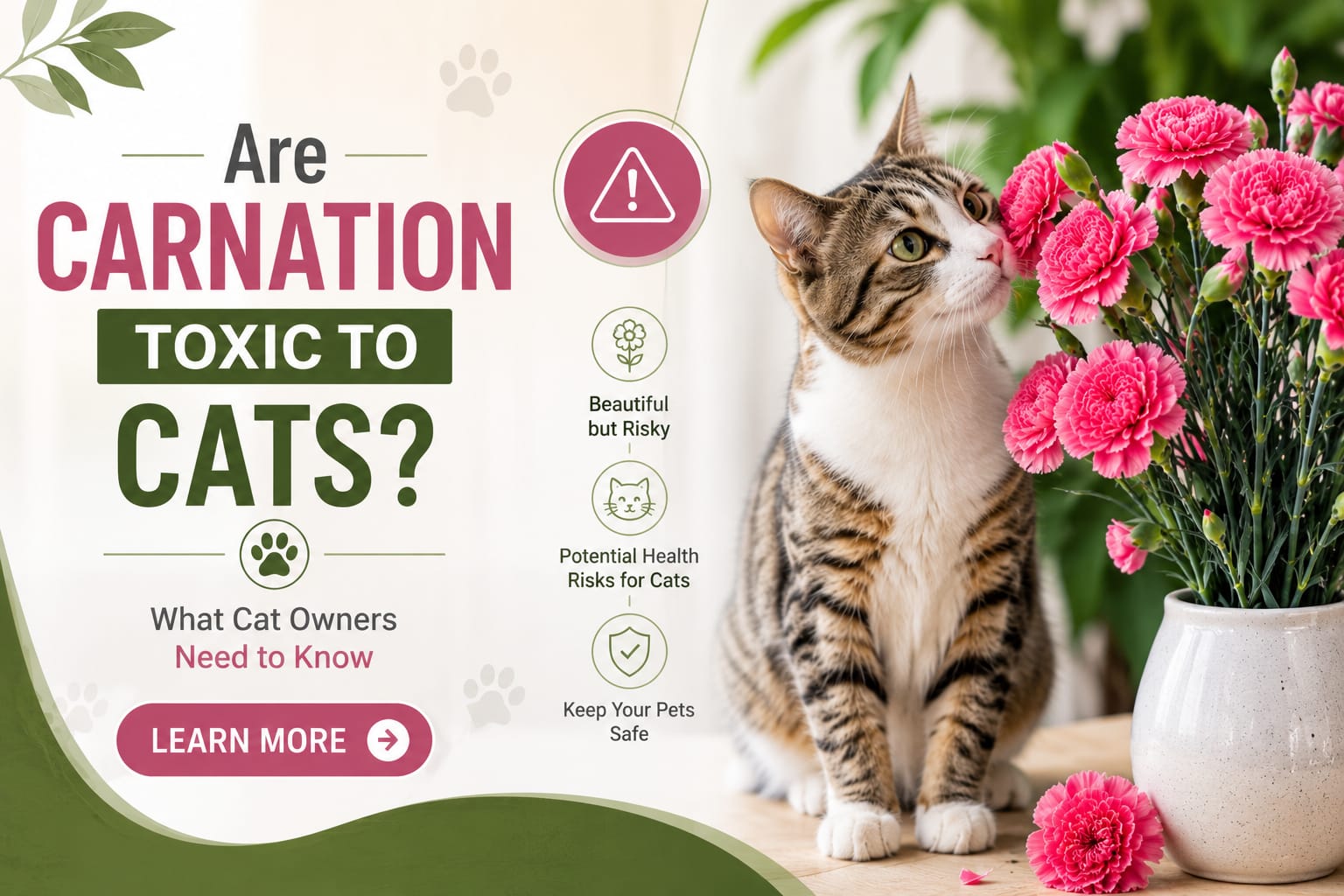
You’ve just received a beautiful bouquet of carnations as a gift, and your cat is curiously sniffing around the flowers on your dining table. Suddenly, you wonder: is this safe for my cat? This is a question many cat owners ask, and the answer might surprise you. If you love fresh flowers but also adore your feline friend, this guide is for you. We’re going to break down everything you need to know about carnations and cat safety in simple, easy-to-understand language.
What Are Carnations?
Carnations are one of the most popular flowers in the world. Scientifically, they’re called Dianthus caryophyllus, but most people simply know them as carnations. These beautiful flowers come in almost every color you can imagine pink, red, white, purple, yellow, and even bi-colored varieties.
You’ll see carnations everywhere. They’re the go-to flower at grocery stores, florist shops, and garden centers because they’re affordable, long-lasting, and look stunning in arrangements. They have layers of ruffled petals that create a full, beautiful bloom. Some carnations are large and showy, while others come in smaller “spray” varieties with multiple small flowers on branching stems. There are even mini carnations used in mixed bouquets.
Understanding The Carnation Toxicity in Cats
Carnations contain harmful compounds called triterpenoid saponins. These are toxic substances that can upset your cat’s digestive system when ingested. The toxins are found in every part of the plant the petals, stems, and leaves all contain these harmful compounds.
Triterpenoid saponins work by irritating your cat’s stomach and intestines. Cats naturally lack certain enzymes that can safely break down these plant toxins. This means when your cat eats a carnation, their body struggles to process the poison, leading to digestive upset and other uncomfortable symptoms.
The good news is that carnation toxicity in cats is usually mild to moderate. It’s rarely fatal or life-threatening. However, “mild” doesn’t mean your cat won’t suffer. Vomiting, diarrhea, and loss of appetite can make your pet feel miserable for hours or even days.
Are Carnations Really Poisonous to Cats?
Yes, absolutely, carnations poisonous to cats. Every single part of the carnation plant is dangerous for your cat:
- The petals (the colorful part)
- The stems (the green part)
- The leaves (all foliage)
- Even dried carnations used in decorative arrangements
The danger is real even if your cat only nibbles a little bit. Your cat doesn’t need to eat a whole flower to get sick. Just a few petals can trigger symptoms because cats are so sensitive to these toxins. Their small body size means even small amounts of poison can cause noticeable effects.
This applies to all types of carnations regular carnations, mini carnations, spray carnations, and any other variety. The color doesn’t matter either. A red carnation is just as toxic as a pink one.
For Other Poisonous Flowers for Cats: Beyond Hydrangeas, are hydrangeas poisonous to cats. Other dangerous flowers include lilies, tulips, daffodils, and oleander, which are also toxic to felines. Understanding all the poisonous garden plants in your area helps create a safer environment for your pet.
Symptoms of Carnation Poisoning: What to Watch For
If your cat has eaten a carnation, symptoms usually appear within a few hours. Here are the signs to watch for:
Common Symptoms:
- Vomiting: This is usually the first and most obvious sign
- Diarrhea: May appear within 24 hours
- Drooling: Excessive saliva, similar to cats drooling
- Loss of appetite: Your cat refuses to eat
- Lethargy: Your cat seems tired, weak, or unusually quiet
- Mouth irritation: Red or swollen areas around the lips and mouth
- Pawing at the mouth: Your cat keeps scratching or rubbing their mouth
- Stomach pain: Your cat may seem uncomfortable, restless, or in distress
Less Common Symptoms:
- Skin irritation or redness on paws (if your cat touched the flower)
- Excessive itching or licking of paws
- Difficulty swallowing
The severity of symptoms depends on how much carnation your cat ate and how sensitive your individual cat is. A kitten or senior cat might have a worse reaction than a healthy adult cat.
What To Do If Your Cat Eats Carnations
If you catch your cat eating a carnation or suspect they’ve eaten one, here’s exactly what to do:
Immediate Actions:
- Remove the flower – Take away any remaining carnation flowers or petals from your cat’s reach immediately
- Stay calm – Your cat will likely be fine. Carnation poisoning is rarely serious, so try not to panic (your cat can sense your stress)
- Don’t induce vomiting – Unlike some poisons, you should NOT make your cat throw up. This can cause more damage
- Call your veterinarian – Contact your vet right away, even if your cat seems fine. Let them know:
- What your cat ate (carnation flower, petals, or stems)
- How much they think your cat ate
- When you suspect your cat ate it
- Monitor your cat – Watch closely for symptoms over the next 24-48 hours
- Keep a log – Note any symptoms, what time they appear, and how severe they are. This information helps your vet
- Get emergency care if needed – If your cat shows severe symptoms, go to an emergency vet clinic immediately
Your veterinarian might tell you to simply monitor your cat at home, or they may want to see your cat for an examination. Some cats need IV fluids if they’re vomiting severely or becoming dehydrated.
Care if Your Cat Eats Carnations
Home Care:
- Provide fresh water: Keep water bowls available at all times
- Offer bland food: Once vomiting stops, offer small amounts of bland food like boiled chicken or rice
- Rest and comfort: Let your cat rest in a quiet, comfortable space
- Monitor bathroom habits: Keep an eye on litter box activity for signs of improvement
- Avoid other treats: Stick to simple food until your vet gives the all-clear
When to Call the Vet Again:
- Vomiting continues for more than 24 hours
- Diarrhea becomes severe or contains blood
- Your cat refuses to eat for more than 48 hours
- Your cat seems increasingly lethargic or unresponsive
- Any new or worsening symptoms develop
Recovery Timeline: Most cats recover completely within 24-72 hours with proper care. However, some cats may need several days to feel completely normal. Once your cat stops vomiting and starts eating, they’re usually on the mend.
Preventing Carnations
Prevention is always better than dealing with a poisoned cat. Here’s how to keep carnations away from your feline friend:
At Home:
- Keep flowers out of reach: Place carnation arrangements on high shelves, tables, or counters your cat cannot jump to
- Use closed spaces: Keep flowers in rooms with closed doors where your cat has no access
- Remove fallen petals: Check daily for fallen petals and clean them up immediately
- Choose pet-safe flowers instead: Use non-toxic flowers like roses (without thorns), sunflowers, orchids, or gerbera daisies
- Ask about arrangements: When friends or family give you flowers, ask them to avoid carnations
- Check bouquets: Always inspect any flowers brought into your home before placing them where your cat can reach
- Consider artificial flowers: High-quality artificial flowers look beautiful and pose zero risk
For Outdoor Cats:
- Avoid planting carnations: Don’t grow carnations in gardens if outdoor cats have access
- Fence off garden areas: Use barriers to keep cats away from flower beds
- Talk to neighbors: Let neighbors know you have a cat and ask them not to grow carnations nearby
- Supervise outdoor time: Watch your cat while they’re outside to catch any plant eating early
- Know other toxic plants: Learn about other poisonous plants for cats in your area
Final Thoughts
Carnations are beautiful flowers that brighten up any space. But when you have a cat, their beauty comes with a risk. The triterpenoid saponins in these flowers can make your cat sick, even if just a small amount is eaten.
Your cat depends on you to keep them safe. By choosing non-toxic flowers for cats, removing carnations from your home, and knowing what to do if an accident happens, you’re being a responsible and loving pet owner.
Remember: when in doubt, always call your veterinarian. It’s better to get professional advice than to worry at home wondering if your cat will be okay. Your vet is your best resource for keeping your feline friend healthy and happy.
Frequently Asked Questions
Q: Will my cat die from eating one carnation petal?
A: No. One or two petals will likely cause mild symptoms at worst. Carnation poisoning is rarely fatal. However, you should still monitor your cat and call your vet for guidance.
Q: How quickly will symptoms appear if my cat eats a carnation?
A: Symptoms typically appear within 2-6 hours of ingestion. Vomiting is usually the first sign. Some cats may not show symptoms until 24 hours later.
Q: Are dried carnations safer than fresh ones?
A: No. Dried carnations are just as toxic as fresh ones. The drying process doesn’t remove the harmful triterpenoid saponins. In fact, cats might be more attracted to dried flowers.
Q: What flowers are safe for cats?
A: Safe flowers for cats include roses (without thorns), sunflowers, orchids, gerbera daisies, marigolds, zinnias, and dahlias. Always verify with your vet before bringing any plant into your home.
Q: Should I induce vomiting if my cat eats a carnation?
A: No, absolutely not. Never induce vomiting without veterinary guidance. Call your vet first they’ll advise whether vomiting is appropriate for your specific situation.