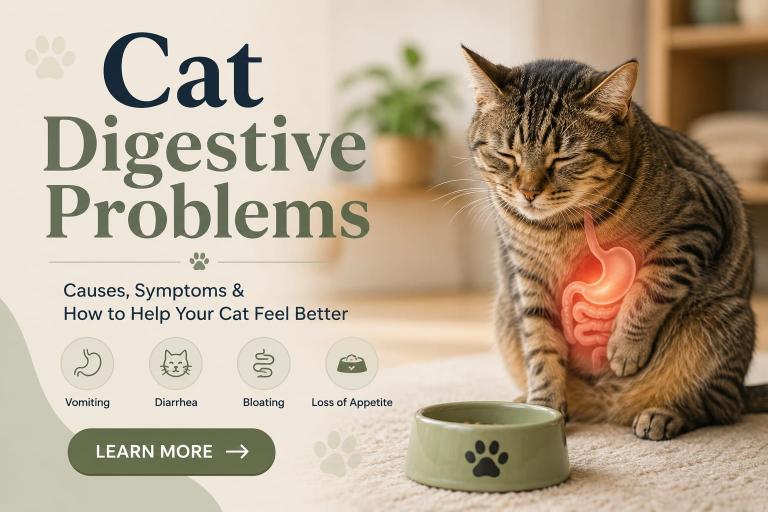
Is your cat throwing up a lot? Does your cat have diarrhea or seems not interested in eating? Then your cat probably has a digestive problem. Don’t worry! You’re not alone. Many cat owners face this issue. Let me explain How to Treat Cat Digestive Problems in a simple way.
What is a Cat Digestive Problem?
Digestion means breaking down food so your cat’s body can use it for energy and health.
When a cat eats food, the stomach and intestines break it down into nutrients. If this process doesn’t work right, your cat has a digestive issue.
In simple words: Your cat’s stomach is upset, and food is not breaking down properly.
Why Do Cats Get Digestive Problems?
There are many reasons why cats get digestive problems. Let me list the main ones:
1. Sudden Food Changes
If you suddenly switch your cat’s food brand or type, the stomach gets upset. Cats don’t like quick changes.
2. Food Allergies
Some cats have allergies to certain ingredients like wheat, corn, beef, or dairy. Their stomach can’t handle it properly.
3. Stress and Home Changes
If you bring a new pet home, move to a new house, or change your cat’s routine, stress can cause digestive problems.
4. Worms and Parasites
Fleas, worms, and other parasites can irritate the stomach and cause problems. If your cat has fleas, you should learn how to get rid of them, as they often cause digestive issues. Similarly, ear mites can trigger secondary digestive problems in cats.
5. Eating Wrong Things
If your cat eats garbage, plants, or food meant for humans, it can upset the stomach.
6. Health Problems
Sometimes serious diseases like kidney problems, pancreatitis, or thyroid issues cause digestive problems too.
Signs That Your Cat Has Digestive Problems
Main Symptoms:
VOMITING : Your cat throws up food regularly. This is one of the most common signs. If you want to understand more about why cats throw up their food, it can help you determine if it’s diet-related or something else.
- Diarrhea that won’t stop
- Your cat doesn’t want to eat or eats very little
- Your cat is getting skinny without any reason
- Your cat sleeps all day and seems lazy
- You hear weird noises from the belly
- Your cat strains and looks uncomfortable
- Your cat is vocal because of stomach pain. Excessive meowing can sometimes indicate discomfort from digestive issues.
- Your cat doesn’t clean itself like normal
- Some cats drooling when they feel nauseous from stomach problems. If you notice drooling along with digestive symptoms, it could mean your cat is experiencing nausea.
What Should You Feed a Cat with Digestive Problems?
This is the most important part. Give the right food, and your cat can get better in 2-3 weeks.
Simple Food Rules:
- Light food that won’t hurt the stomach
- Chicken, turkey, fish (plain, no spices)
- Not too many different things
- Keep water available 24/7
Sensitive Stomach Food for Cats
If your cat has a sensitive stomach, you need to buy special food made for sensitive cats.
- EASY-TO-DIGEST PROTEIN
- SIMPLE INGREDIENTS
- ADDED FIBER
- PROBIOTICS INCLUDED
- NO COMMON ALLERGENS
Popular brands: Royal Canin Digest, Hill’s Science Diet Sensitive Stomach, Purina Pro Plan
Top Proteins Your Cat Should Eat:
- CHICKEN: Boiled plain, no skin or bones
- TURKEY: Boiled, plain, no seasoning
- FISH: Salmon or white fish, cooked
- DUCK: If chicken doesn’t work
Why these are best: These proteins break down easily and don’t irritate the stomach.
Probiotics: What Are They and Why Do Cats Need Them?
Your cat’s stomach naturally has bacteria that help with digestion. When your cat gets digestive problems, these bacteria get out of balance.
Probiotics add good bacteria back to fix the balance.
What Probiotics Do:
- STOP DIARRHEA
- REDUCE VOMITING
- MAKE THE STOMACH LESS SWOLLEN
- HELP FOOD DIGEST BETTER
- MAKE NORMAL BOWEL MOVEMENTS
- Best probiotic types: Lactobacillus, Bifidobacterium
Foods to Avoid Cat During Digestive Problems
- Spicy Food: Your cat will get severe vomiting, diarrhea, and stomach pain. The spices burn the stomach lining.
- Onion & Garlic: These destroy your cat’s red blood cells and cause anemia. Your cat becomes very weak and pale. Even small amounts are dangerous.
- Dairy Products: Most cats are lactose intolerant. They get diarrhea, vomiting, and severe stomach upset within hours.
- Fatty Foods: Fatty food causes diarrhea, vomiting, and can lead to pancreatitis (serious inflammation of the pancreas).
- Wheat and Corn: Your cat gets allergic reactions – diarrhea, vomiting, skin itching, and ear infections. This is why sensitive stomach food avoids these ingredients.
- High Fiber: Too much fiber causes constipation or makes existing diarrhea worse. It blocks normal digestion.
Home Remedies for Mild Digestive Issues
If your cat has a light problem and you need to help quickly:
- Plain Boiled Chicken: No skin, bones, or seasoning
- Plain White Rice: Boiled, cooled down
- Pumpkin: Just a teaspoon, helps with digestion
- Important: These only work for 1-2 days. After that, see a vet.
When to Take Your Cat to the Vet
Go to the vet RIGHT NOW if:
- Your cat vomits for more than 24 hours
- Diarrhea doesn’t stop for 2-3 days
- There’s blood in vomit or poop
- Your cat acts like they’re in pain
- Your cat loses weight quickly
- Your cat seems very weak
Do Dogs Get the Same Digestive Problems?
Yes! Dogs can get digestive problems too like cats have:
Diarrhea and vomiting Sensitive stomachs Food allergies Parasites
Dogs need more fiber than cats Dogs can eat more variety than cats Dogs recover faster than cats Dog food is different from cat food
So if you have both a cat and dog, give them different food. Dogs can face serious digestive issues like dog pancreatitis, which requires different treatment than cats.
Frequently Asked Questions
Q: How long does it take for a cat to get better?
A: Light cases get better in 3-5 days. Serious cases take 2-3 weeks. Always see a vet to know for sure.
Q: How much does sensitive stomach food cost?
A: Usually 30-50% more expensive than regular food. But it’s cheaper than vet bills.
Q: Do probiotics really work?
A: Yes! that probiotics help cats with digestive problems.
Q: Is Royal Canin Digest good?
A: Yes! It’s specifically made for sensitive stomach cats, and vets recommend it.
Q: Dry food or wet food – which is better?
A: Wet food is better. It has more water and helps hydration, which helps digestion.
Final Thoughts
Most cats with digestive problems get completely better with the right food and care. Your cat will:
Stop throwing up Have normal poop Gain weight back Feel happy and playful again Have energy to play
You’re not alone, and your cat will get better. Just follow these simple steps and work with your vet.