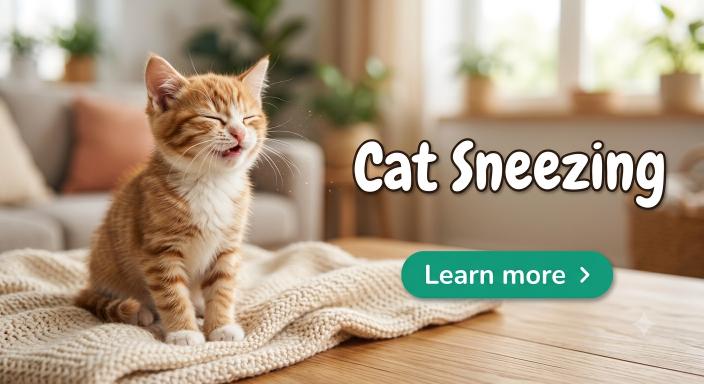
A sneeze here and there is normal for cats. It usually just means something tickled their nose, like dust or a stray hair. But if your cat is sneezing often, or the sneezing comes with other changes, it can be a sign of something that needs attention. The good news is that most causes are easy to spot once you know what to look for.
In this guide, we will walk through the common reasons cats sneeze, how to tell the difference between a harmless sneeze and a warning sign, and what you can do to help.
What Causes a Cat to Sneeze?
Sneezing happens when something irritates the inside of your cat’s nose. The body reacts by forcing air out quickly to clear the irritation. This can happen for many reasons, and most of them are not serious.
Here are the most common causes:
- Dust and household irritants. Cleaning sprays, scented candles, air fresheners, and even cat litter dust can irritate a cat’s nose.
- Seasonal allergies. Pollen and mold spores can bother cats the same way they bother people.
- Something stuck in the nose. A blade of grass, a bit of litter, or a loose hair can get lodged and cause repeated sneezing until it clears.
- A cold or virus. Cats can catch upper respiratory infections, much like humans catch colds.
- Dental problems. The roots of a cat’s upper teeth sit close to the nasal passages, so a tooth infection can sometimes cause sneezing.
Most of these causes clear up on their own within a day or two. If the sneezing keeps going or gets worse, it is worth a closer look.
Is My Cat Sneezing or Reverse Sneezing?
Many cat owners get confused between regular sneezing and something called reverse sneezing. A regular sneeze pushes air out through the nose. Reverse sneezing does the opposite. Your cat will make a snorting sound while pulling air in quickly through the nose, almost like they are choking or gasping.
Reverse sneezing can look alarming, but it is usually harmless. It often happens when a cat is excited, eating too fast, or has mild irritation in the back of the nose or throat. It typically stops on its own within a few seconds to a minute. If it happens often or lasts a long time, mention it to your vet just to be safe.
When Should You Worry About Cat Sneezing?
A single sneeze is nothing to worry about. But you should pay closer attention if the sneezing becomes frequent or is joined by other symptoms.
Watch for these signs:
- Sneezing that lasts more than two or three days
- Thick, yellow, or green nasal discharge
- Watery or red eyes
- Coughing or wheezing
- Loss of appetite
- Low energy or hiding more than usual
- Blood in the sneeze or nasal discharge
- Swelling around the face or nose
If you notice any of these along with sneezing, it is time to book a vet visit. Cats are good at hiding when they feel unwell, so these signs matter even if your cat still seems mostly normal otherwise.
Do Kittens Sneeze More Than Adult Cats?
Kittens sneeze more often than adult cats, and there is a simple reason for this. Their immune systems are still developing, which makes them more likely to pick up mild colds, especially if they came from a shelter or live with other cats. A kitten sneezing occasionally is usually nothing serious.
That said, kittens can get sicker faster than adult cats if an infection takes hold. If a kitten is sneezing along with low energy, not eating, or eye discharge, do not wait it out. A quick vet check is the safer choice.
What Are the Medical Causes of Cat Sneezing?
Sometimes sneezing points to something beyond simple irritation. These causes are less common but worth knowing about.
- Upper respiratory infections are the most frequent medical cause. Viruses such as feline herpesvirus and calicivirus are common culprits, especially in cats that live in shelters or multi-cat homes. Once a cat catches feline herpesvirus, it can stay in their system for life and flare up again during stressful times.
- Bacterial infections often show up after a virus has already weakened your cat’s immune system. These tend to cause thicker nasal discharge and can make sneezing worse.
- Dental disease is an often overlooked cause. If a tooth becomes infected, the swelling can reach the sinuses and trigger sneezing. Bad breath and drooling are common along with it. If your cat is drooling more than usual, you have to consult you vet.
- Nasal growths or tumors are rare but more likely in older cats. Warning signs include sneezing that slowly gets worse over weeks, one-sided nasal discharge, or a change in breathing sounds.
- Fungal infections, such as those caused by Cryptococcus, are more common in cats that spend time outdoors. These can cause swelling around the nose along with sneezing.
Can Fleas or Skin Irritation Cause Sneezing?
It might seem unrelated, but cats fleas allergies sometimes sneeze more due to constant scratching, licking, and skin inflammation that irritates their whole system. If your cat is dealing with fleas along with sneezing, it is worth ruling out as a factor.
How To Treat Cat Sneezing?
Treatment depends entirely on what is causing it.
- Irritant-related sneezing usually clears up once the trigger is removed, like switching to unscented litter or avoiding sprays near your cat.
- Allergies may be managed with antihistamines or by simply reducing exposure to the allergen.
- Viral infections often just need supportive care, like keeping your cat hydrated and comfortable while their body fights it off. Severe cases may need antiviral medication.
- Bacterial infections are treated with antibiotics prescribed by your vet.
- Dental issues usually require a dental cleaning or extraction to resolve the sneezing.
- Foreign objects need to be removed by a vet, since trying this at home can push the object further in.
Never give your cat human cold medicine or allergy medication unless your vet specifically tells you to. Many common human medications are unsafe for cats.
Can You Prevent Cat Sneezing?
You cannot prevent every sneeze, but you can lower the odds of frequent sneezing with a few simple habits:
- Use unscented, low-dust cat litter
- Avoid spraying air fresheners or cleaning products near your cat
- Keep your home reasonably dust-free
- Stay current on vaccinations, especially if your cat is around other cats
- Book regular dental checkups
- Feed a balanced diet to support a strong immune system
Cats that get routine checkups tend to bounce back faster from minor illnesses and are less likely to develop serious complications later.
Home Care Tips While You Wait for a Vet Visit
If your cat’s sneezing is mild and they are otherwise eating, playing, and acting like themselves, there are a few things you can do at home to keep them comfortable while you monitor them.
- Run a humidifier in the room where your cat sleeps to ease dry, irritated nasal passages
- Gently wipe away any discharge around the nose with a warm, damp cloth
- Keep food and water easy to reach, since a stuffy nose can make cats less interested in eating
- Reduce stress where you can, since flare-ups are often linked to changes at home
- Avoid bathing or handling your cat roughly, as this can add unnecessary stress on top of an already irritated system
These steps will not cure an underlying infection, but they can make your cat noticeably more comfortable while you decide whether a vet visit is needed.
Frequently Asked Questions
Q: Is it normal for cats to sneeze a few times a day?
Occasional sneezing throughout the day can be normal, especially in dusty homes. If it becomes constant or forceful, it is worth mentioning to your vet.
Q: Can stress cause a cat to sneeze?
Yes. Stress can trigger flare-ups in cats that carry feline herpesvirus, even if they seem otherwise healthy.
Q: Should I take my cat to the vet for one sneeze?
No. A single sneeze is not a reason for concern. Watch for patterns instead of reacting to one isolated sneeze.
Q: Can indoor cats still catch respiratory infections?
Yes, especially if they live with other cats or have been around other animals recently, such as during a shelter stay or boarding.
Q: Is cat sneezing contagious to other cats?
Many upper respiratory infections are contagious between cats, so it is a good idea to keep a sneezing cat away from other pets until you know the cause.
If your cat’s sneezing feels different than usual or comes with other symptoms, do not wait for it to get worse. A quick vet visit can catch small problems before they turn into bigger ones.