Your dog’s gut does a lot more than digest food. It controls energy, mood, skin health, and even the immune system. When something goes wrong in there, it rarely stays “just a stomach thing.” It shows up as itchy skin, bad breath, low energy, or a dog who suddenly won’t eat.
This guide is built differently than most articles on this topic. Instead of just listing facts, we break down each issue as a problem, then give you a clear solution you can use today. You’ll learn the symptoms of poor gut health in dogs, what causes poor gut health in dogs, and exactly how to treat poor gut health in dogs naturally, without confusing science talk.
Your dog’s gut is home to trillions of bacteria, both good and bad. When the good bacteria outnumber the bad, digestion runs smoothly and the immune system stays strong. When the bad bacteria take over, your dog’s whole body feels it, not just their stomach.
This imbalance has a name: dysbiosis. It’s one of the most common, and most fixable, problems in dog health today.
Symptoms of Poor Gut Health in Dogs
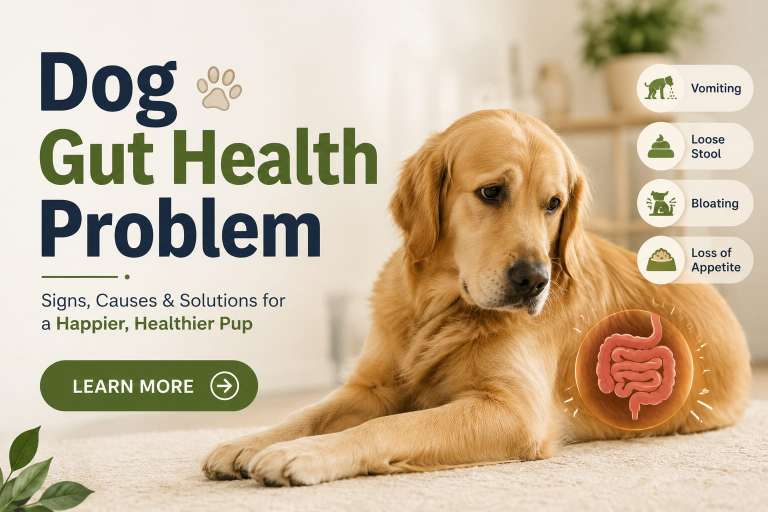
Most dog owners miss the early warning signs because they look small at first, like a little extra gas or one bad-smelling day. But these signs add up.
- Loose stool, diarrhea, or constipation
- A bloated or gassy belly
- Vomiting shortly after meals
- Bad breath that doesn’t go away
- Itchy skin, hot spots, or a dull coat
- Low energy or acting “off”
- Picky eating or skipped meals
- Repeated ear infections
- Weight loss with no clear reason
What are the signs of poor gut health in dogs long term? If left unaddressed, mild symptoms can turn into ongoing issues like chronic diarrhea, food sensitivities, or skin allergies that keep coming back no matter what shampoo or spray you try.
Start tracking your dog’s stool, appetite, and energy for one week. Write down anything unusual. This simple habit helps you catch problems early and gives your vet useful information if you need to book a visit.
Symptoms of Unhealthy Gut Bacteria in Dogs
Poor gut health and unhealthy gut bacteria are related, but they’re not exactly the same. The symptoms of unhealthy gut bacteria in dogs tend to be more specific and more stubborn than general stomach upset.
- Greasy, mucus-covered, or oddly colored stool
- Stronger-than-normal gas
- Skin flare-ups that return again and again
- A weaker immune system, meaning your dog gets sick more often than usual
- Slow recovery after meals or treats
These symptoms usually mean the gut needs more than a diet tweak. A targeted probiotic, along with a short-term bland diet, gives good bacteria the support they need to push out the bad ones. If symptoms last more than a week, a vet visit is the safer next step.
Causes of Poor Gut Health in Dogs
You can’t fix a problem you don’t understand. So, what causes poor gut health in dogs? It’s almost never just one thing. Here are the most common causes:
- Low-quality food with too many fillers and not enough real nutrition
- Sudden food changes that shock the digestive system
- Antibiotics, which kill both good and bad bacteria at the same time
- Stress, from travel, loud noises, or changes at home
- Food allergies or sensitivities, often to chicken, dairy, or grains
- Parasites, which damage the gut lining over time
- Table scraps and human food, which are often too fatty or spicy
- Not enough fiber, since fiber is what feeds good bacteria
- Age, since older dogs naturally digest food less efficiently
How to Treat Poor Gut Health in Dogs
Once you understand the symptoms and causes, the next question is simple: how to treat poor gut health in dogs the right way, without guessing.
- Simplify meals: Feed plain boiled chicken and rice for one to two days to give the gut a rest.
- Add fiber: Plain canned pumpkin helps firm up loose stool and feeds good bacteria.
- Cut out extras: Stop all table scraps, fatty treats, and human snacks during recovery.
- Add a probiotic: This helps rebuild the balance of good bacteria faster than diet alone.
- Keep water available: Hydration supports digestion and helps flush out toxins.
- Track progress daily: Most mild cases improve within two to three days.
If your dog isn’t improving, or symptoms are severe, it’s time to call the vet instead of waiting it out..
What Foods Are Good for Dogs Gut Health
Many owners want to help but aren’t sure which foods are actually safe and useful.
- Plain pumpkin
- Sweet potato
- Plain yogurt or kefir (small amounts only)
- Cooked, plain chicken or turkey
- Bone broth
- Plain oatmeal (no sugar or flavoring)
- Green beans
- Blueberries
These foods are gentle on digestion and support the growth of good gut bacteria without adding unnecessary fat or sugar.
How to Improve Dogs Gut Health
Big changes are hard to stick to. If you’re asking how to improve my dogs gut health in a way that actually fits real life, the answer is small, steady habits.
- Feed meals at the same times every day
- Let your dog move around after eating, not right before or after intense exercise
- Add one gut-friendly food a few times a week, not every meal
- Keep treats limited and healthy
- Stick to a steady daily routine to lower stress
Consistency beats intensity. Small daily habits do more for gut health than occasional big efforts. Not every probiotic on the shelf is created equal, and picking the wrong one wastes time and money.
- Make sure it’s made specifically for dogs, not repurposed from human products
- Check for multiple bacteria strains listed by name
- Look for a clear CFU (colony-forming units) count on the label
- Pick a form your dog will actually eat consistently
- Ask your vet for a specific brand if you’re unsure where to start
The best probiotic for dogs gut health is one your dog will actually take every day, not just the one with the fanciest packaging.
Knowing how to restore gut health in dogs after a rough patch is just as important as treating the original problem.
Repeated Gut Issues That Keep Coming Back
Some dogs seem to bounce back quickly, while others deal with the same symptoms over and over. This usually points to an underlying pattern that hasn’t been fully addressed.
- Keep a simple food and symptom diary
- Remove one possible trigger food at a time, not all at once
- Stay consistent with a probiotic for at least four to six weeks
- Recheck symptoms weekly instead of expecting overnight results
Patience matters here. Gut bacteria take time to rebuild, and rushing the process often leads to setbacks.
Frequently Asked Questions
Q: How can I restore my dog’s gut health?
A: Feed bland food like chicken and rice, add plain pumpkin for fiber, and give a dog probiotic. Cut out table scraps and keep fresh water available.
Q: How do I help a dog with gut problems?
A: Simplify meals, remove fatty treats, and add gut-friendly foods like pumpkin or plain yogurt. A probiotic can speed things up. See a vet if it doesn’t improve in a few days.
Q: How do I tell if my dog has bad gut health?
A: Look for loose stool, gas, bad breath, itchy skin, low energy, or picky eating. Two or more of these together usually points to a gut issue.
Q: How long does it take for gut health to improve in dogs?
A: Mild cases improve in 2–3 days. Bigger imbalances, like after antibiotics, can take 4–6 weeks to fully heal.
Final Thoughts
Poor gut health in dogs is common, but almost every case has a clear path forward. Once you understand the real symptoms, the real causes, and the right solutions, from diet changes to the best probiotic for dogs gut health, you can fix the problem instead of just managing it.
Start small. Track symptoms, simplify meals, add the right supplement, and stay consistent. A healthy gut leads to a healthier, happier dog, and now you have the roadmap to get there.