
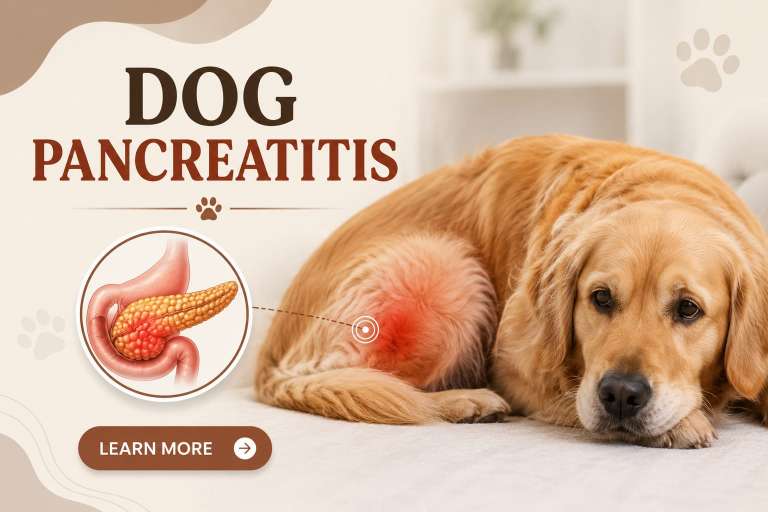
Is your dog throwing up, refusing food, or acting like their tummy hurts? This could be dog pancreatitis. It sounds like a big scary word, but it is actually easy to understand once someone explains it simply.
Pancreatitis just means one small organ inside your dog’s belly has become swollen and sore. This organ is called the pancreas. When it gets upset, it can make your dog feel very sick.
The good news is that most dogs get better with the right care. In this guide, we will explain what dog pancreatitis is, why it happens, what signs to watch for, and how to help your dog heal.
What Is Dog Pancreatitis
It is swelling and irritation of the pancreas, a small organ near your dog’s stomach. Think of the pancreas like a tiny kitchen inside your dog’s body. This kitchen makes special juices that help break down food.
Sometimes, those juices turn on too early, while they are still inside the pancreas instead of moving to the intestines where they belong. Instead of helping digest food, the juices start to hurt the pancreas itself. This causes swelling, pain, and sickness.
There are two kinds of pancreatitis. One comes on fast and suddenly, called acute pancreatitis. The other builds up slowly over time and can come and go, called chronic pancreatitis.
What Does the Pancreas Do
The pancreas has two big jobs inside your dog’s body.
First, it makes juices called enzymes that help break down food so your dog’s body can use it. Second, it makes something called insulin, which helps keep blood sugar at a healthy level.
When the pancreas gets swollen, both of these jobs get harder to do. This is part of why pancreatitis can make a dog feel so unwell all over, not just in the belly.
What Causes Pancreatitis in Dogs
Dog owners often ask, what causes pancreatitis in dogs? Here are the most common reasons:
- Eating fatty food, like bacon, butter, or fried leftovers
- Getting table scraps from the dinner table
- Carrying extra weight or being overweight
- Eating a diet that is too high in fat overall
- Taking certain medicines that raise the risk
- Having another health problem, like diabetes
- Being a certain breed, since some dogs are more likely to get it
- Sometimes, there is no clear reason at all
Even one greasy meal, like a plate of bacon grease poured over dog food, can be enough to cause a flare-up in some dogs.
Dog Pancreatitis Symptoms
What are the signs of pancreatitis in dogs? Watch for:
- Throwing up, sometimes more than once
- Loose or watery poop
- Not wanting to eat
- Feeling tired or weak
- Shaking or trembling
- Feeling warmer than normal
- A sore or tender belly
- Standing with the front legs down and rear end up, like a stretch (this is called the praying position, and it often means belly pain)
- Dry gums or feeling very thirsty
- Losing weight without trying
Best Foods for Dogs with Pancreatitis
- Boiled chicken, skinless lean protein, very low in fat
- Plain white fish easy to digest, low fat
- Prescription low-fat food made specifically for pancreas recovery
- Plain white rice gentle on the stomach
- Plain canned pumpkin adds fiber, supports digestion
Foods to Avoid
- Bacon very high in fat
- Butter pure fat, hard on the pancreas
- Cheese high fat, can trigger flare-ups
- Fatty meat and fried food hard for the pancreas to process
- Sausages and table scraps often hide extra fat and salt
Early Warning Signs
The very first signs are usually throwing up and not wanting to eat. Many dogs also seem quieter than normal or do not want to move around as much.
It is easy to think these signs mean a simple upset stomach. But if the vomiting happens more than once or twice, it is best to take it seriously.
When Is Dog Pancreatitis an Emergency
Call your vet right away if your dog has:
- Vomiting that will not stop
- Strong signs of belly pain, like the praying position
- Weakness or trouble standing up
- A hard or swollen-feeling belly
- Vomiting and diarrhea together, with no interest in food or water
- Pale or yellow-looking gums
Pancreatitis can get serious fast, so it is always safer to call the vet than to wait and see what happens.
How Vets Diagnose Dog Pancreatitis
A vet uses a few simple steps to check for pancreatitis. First, they gently feel your dog’s belly and check for pain, fever, or dehydration.
Next, they may run a blood test. One special test, called SPEC cPL, checks for a substance called pancreatic lipase. When this level is too high, it points to pancreatitis.
Sometimes vets also use an ultrasound, which lets them see a picture of the pancreas to check for swelling. An x-ray may be used too, mostly to rule out other problems like a blockage.
Dog Pancreatitis Treatment
How do vets treat pancreatitis in dogs? Treatment usually includes:
- Fluids given through a vein. This helps fix dehydration and flush out the substances causing inflammation.
- Pain medicine. Pancreatitis really hurts, so vets give medicine to keep your dog comfortable.
- Medicine for nausea. This helps stop the vomiting so your dog can start eating again.
- A low-fat diet. Once vomiting slows down, bland, low-fat food gives the pancreas a chance to rest and heal.
- A hospital stay. More serious cases may need to stay at the vet clinic for a few days for close care.
- A feeding tube. In rare, severe cases where a dog will not eat at all, a feeding tube can give nutrition directly.
Mild cases sometimes only need outpatient care, while more serious cases need closer monitoring.
Recovery Timeline
Here is what recovery often looks like:
- Day 1: Vomiting starts to come under control with fluids and medicine.
- Day 3: Appetite may slowly start coming back with small, bland meals.
- Week 1: Energy levels usually begin to improve.
- Week 2: Most mild to medium cases show a big improvement.
- One month: Many dogs are back to their normal selves, though some may need a special diet long term.
Can Dogs Recover from Pancreatitis
Yes, most dogs recover well, especially with fast treatment. Mild cases often get better within just a few days.
More severe cases take longer and carry more risk. In rare cases, pancreatitis can become very serious, which is why getting to the vet quickly makes such a big difference. It can come back, especially the type that keeps returning slowly over time. A one-time flare-up from something like a fatty meal may never happen again if the trigger is avoided.
But some dogs get repeated flare-ups over months or years. These dogs usually need a long-term low-fat diet to help keep things under control.
How to Prevent Dog Pancreatitis
- Keep your dog at a healthy weight
- Feed a low-fat, balanced diet
- Avoid giving table scraps, especially fatty ones
- Make sure your dog gets regular exercise
- Visit the vet regularly for checkups
Common Mistakes Dog Owners Make
Giving fatty treats, even small ones, can be enough to trigger a flare-up in a sensitive dog. Stopping medicine early, just because a dog seems better, can let the swelling come back.
Ignoring vomiting as “just an upset stomach” can delay needed care. Waiting too long to call the vet can turn a mild case into a serious one.
Frequently Asked Questions
Q: Can dogs recover from pancreatitis?
Yes, most dogs recover well, especially with early treatment. Mild cases can improve within days.
Q: Can pancreatitis kill a dog?
In rare, severe cases, it can become life-threatening if treatment is delayed. Quick vet care greatly improves the outcome.
Q: How long does pancreatitis last?
Mild cases may clear up in a few days to a week. Chronic cases can involve ongoing management for months or longer.
Q: Can dogs drink water?
Yes, dogs with pancreatitis can usually still drink water, though a vet may briefly limit food and water during severe vomiting.
Q: Can dogs eat chicken?
Yes, plain boiled, skinless chicken is a safe, low-fat food often used during recovery.
Q: Can puppies get pancreatitis?
Yes, though it is less common in puppies than older dogs, it can still happen, especially after eating something fatty.
Q: Is pancreatitis painful?
Yes, it is a painful condition, which is why pain medicine is a normal part of treatment.
Q: What foods help pancreatitis?
Lean, low-fat foods like boiled chicken, white fish, plain rice, and pumpkin are gentle on the digestive system during recovery.
Final Thoughts
Dog pancreatitis can sound scary at first, but it is very manageable when caught early. Watching for signs like vomiting, belly pain, and loss of appetite can help you act fast if your dog needs help.
With quick vet care, the right medicine, and a gentle low-fat diet, most dogs bounce back well. If you ever notice these signs in your dog, do not wait it out at home. A quick call to your vet can make all the difference in how fast and how well your dog recovers.