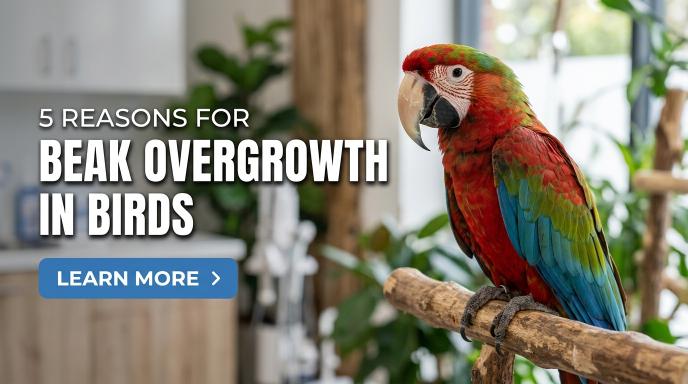
A bird with a long curved beak is not always something to worry about, but sometimes it is a sign of a real health problem. Beak overgrowth in birds usually happens for one of five reasons: not enough natural wear, poor diet, liver disease, infections, or genetics. Knowing which one applies to your bird can help you fix the problem before it gets worse.
Your bird’s beak does a lot of work every day. It helps them eat, climb, groom, and explore. So when the beak grows too long, cracks, or changes shape, it can affect almost everything your bird does. Below, we cover what beak overgrowth looks like, why it happens, and what to do about it.
What Is Beak Overgrowth in Birds?
A bird’s beak is made of keratin, the same material found in human nails. It grows all the time, and in a healthy bird, everyday activities like chewing and eating wear it down naturally. An overgrown bird’s beak is most commonly caused by chronic liver disease (such as fatty liver disease), malnutrition (particularly Vitamin A deficiency), or a lack of natural wear and tear from chewing and foraging
Beak overgrowth happens when that natural wear does not keep up with growth. The beak becomes too long, uneven, or misshapen. You might notice:
- A long or hooked upper beak
- An upper and lower beak that no longer line up
- Flaking, cracking, or rough texture
- Trouble picking up or chewing food
Because the beak is so important for survival, even a small change in shape can make eating and grooming harder for your bird.
Why Does Beak Overgrowth Happen?
Most bird owners assume an overgrown beak just means their bird needs a trim. In reality, overgrowth is often a sign of something else going on. Here are the five most common causes.
1. Not Enough Natural Wear
In the wild, birds chew on wood, crack open seeds, and dig for food all day long. This constant activity keeps their beaks worn down. Pet birds often do not get the same amount of chewing and foraging, so their beaks can grow past a healthy length.
2. Poor Diet
A diet that is missing key vitamins and minerals can affect how the beak grows. Since the beak is made of keratin, the same nutrients that keep feathers and skin healthy also keep the beak growing at a normal rate and shape. Birds fed only seeds, without enough variety, are especially at risk.
3. Liver Disease
Liver problems are one of the most common medical causes of beak overgrowth. The liver plays a role in keratin production, so when it is not working properly, the beak can grow too fast or grow unevenly.
4. Infections and Parasites
Fungal infections, bacterial infections, and mites can all damage the tissue at the base of the beak, where new growth begins. This damage can lead to beak growth problems, including overgrowth, flaking, or an oddly shaped beak.
5. Genetics or Past Injury
Some birds are simply born with a tendency toward beak growth problems, sometimes linked to a condition called avian keratin disorder. Past trauma to the beak can also cause it to grow back deformed or overgrown, even after the injury has healed.
What Does a Cracked or Chipped Beak Mean?
A cracked or chipped beak is not something to ignore. Unlike a fingernail, a bird’s beak has blood vessels and nerve endings running through it. A crack can be painful and may bleed, and if left untreated, it can get worse or become infected.
Cracks often happen when an overgrown beak becomes brittle, when a bird injures itself on a hard surface, or when nutritional deficiencies weaken the keratin. If you notice any cracking, chipping, or bleeding, it is best to have your bird checked by an avian vet right away.
Healthy vs Unhealthy Beak
Knowing what a healthy beak looks like makes it easier to spot problems early.
A healthy beak is usually:
- Smooth, with even coloring
- Properly aligned, with the upper and lower beak meeting correctly
- Free of cracks, flaking, or soft spots
- A normal length and shape for your bird’s species
An unhealthy or deformed bird beak may show:
- Noticeable overgrowth or a hooked tip
- Uneven or crooked alignment
- Cracks, chips, or discoloration
- Difficulty eating, dropping food, or reduced appetite
Keep in mind that some species, like macaws and pionus parrots, naturally have longer upper beaks. What looks overgrown on one bird might be completely normal on another, so it helps to compare your bird to others of the same species.
Why an Overgrown Beak Is a Problem
Left unchecked, an overgrown beak can cause real harm. As the beak grows longer or changes shape, birds struggle to eat properly, which can lead to weight loss. Grooming becomes harder too, which affects feather condition. The beak also becomes more likely to crack or chip. In severe cases, birds may stop eating altogether, which can become life threatening.
How to Trim a Bird’s Beak
Many owners want to know how to trim a bird’s beak at home, but this is one task that should always be left to a professional. A bird’s beak is not like a nail. It contains blood vessels and nerve endings, and cutting even a small amount too deep can cause serious bleeding, pain, or permanent damage.
Here is how professionals safely correct an overgrown beak.
- Health check first. Before any trimming, a vet or groomer checks for underlying health issues, since trimming alone will not fix problems like liver disease or infection.
- Gentle restraint. The bird is usually wrapped in a towel to keep it calm and still during the procedure.
- Grinding, not cutting. Instead of clippers, professionals use a rotary tool similar to a Dremel to slowly grind down the excess beak. This gives much more control than cutting.
- Avoiding the blood supply. The tool is used carefully to shape the beak without reaching the blood vessels inside.
- Monitoring afterward. Once trimming is done, the bird is watched to make sure it can eat comfortably with its new beak shape.
For very small birds like budgies or cockatiels, a vet may sometimes use an emery board instead. Either way, this is not a DIY job.
How to Prevent Beak Overgrowth
The best way to deal with beak overgrowth is to stop it before it starts.
- Give your bird things to chew on. Wooden toys, natural perches, and cuttlebones all help wear down the beak the way nature intended.
- Feed a balanced diet. Make sure your bird gets a variety of foods with the vitamins and minerals needed for healthy keratin growth, not just seeds.
- Schedule regular checkups. An avian vet can catch early signs of beak growth problems before they turn into bigger issues.
- Watch for changes. Keep an eye out for dropped food, trouble eating, or less interest in chewing toys, since these can be early warning signs.
When Should You See a Vet?
Book a vet visit as soon as you notice any of the following:
- A beak that is growing quickly or looks misshapen
- Trouble eating or unexplained weight loss
- Cracks, chips, bleeding, or discoloration
- Sudden changes in grooming habits or behavior
Catching these signs early gives your bird the best chance at a quick, simple fix instead of a more serious problem down the road.
Frequently Asked Questions
Q: Can I trim my bird’s beak myself?
No. A bird’s beak contains blood vessels and nerves, so trimming should always be done by a vet or trained groomer.
Q: Is a slightly long beak always a problem?
Not always. Some species naturally have longer beaks. Compare your bird to others of the same species, or ask your vet if you are unsure.
Q: What causes a cracked beak?
Cracks often happen when the beak becomes overgrown and brittle, or from an injury or nutritional deficiency.
Q: Can diet alone fix beak overgrowth?
A better diet can help prevent overgrowth, but if it is already happening, your bird should still see a vet to rule out underlying illness.